Designing for Marketplace Success: Expedia Inventory Setup
Led a comprehensive redesign in Expedia’s hotel onboarding, transforming a complex and high-friction process into an intuitive, step by step flow that focused on improving the quality of hotel listing, enhancing hotel visibility, and ultimately optimizing revenue.
Team
Expedia Partner Solutions
Year
2023-2024
Role
Lead designer
Overview
Rooms and rates creation is essentially where partners configure their room inventory and pricing on Expedia.
This experience directly determines listing quality, competitive positioning, and visibility in traveler searches - fundamentally impacting booking potential and revenue.
My journey - wearing multiple hats
I led this initiative and transformed a complex, high-friction onboarding flow into a streamlined experience that delivered measurable business results.
💎
Drove design + Product strategic discovery
My comprehensive discovery phase produced 4 essential deliverables that drove our approach and shaped the product strategy.
✍️
Led experience architecture & design direction
Drove a depth-focused approach that aligned with hotel partner mental models and industry best practices.
💻️
Co-drove a strategic implementation
Delivered value incrementally while managing development complexity, balanced user needs with long-term platform migration goals
The problem worth solving
Data analysis revealed:
New hotels frequently go live with incomplete inventory and non-competitive offerings, resulting in poor booking conversion and high partner churn.
One of highest drop-off rates in onboarding and driving high support costs.
Feedback received:
Feedback from both hotel partners and support teams indicate Rooms & Rates creation as one of the most complicated parts of the onboarding experience
Where we’re heading
User goal
Complete room setup in onboarding efficiently without confusion or abandonment
Create listings that accurately represent property offerings
Configure competitive rates that align with traveler preferences
Minimize time spent on this flow
Product goal
Achieve a higher page conversion and overall live property conversion rate
Reduce support costs by making the experience self-explanatory
Improve listing quality to driver higher booking CVR
Before: from overwhelming
After: an intuitive experience reimagined
Impact that matters
🎉 When users win, business wins.
By December, this streamlined experience achieved >90% overall conversion with individual steps reaching 98-100% completion. Partners now save 7 minutes during this process.
Support inquires plummeted as partners now confidently configure rooms and rates without assistance.
👏 Beyond the metrics: Building for the future
We established UX patterns that extended into the post-onboarding management experience. This created much-needed consistency across the partner lifecycle while providing a scalable framework that continues to drive value.
Drove design + Product discovery
Instead of directly jumping into design and trying to optimize complex UI, I took a step back and approach the challenge as a strategic opportunity.
Collaborated with product manager, I created 4 key deliverables that included data-driven frameworks and research-based insights that shaped product strategy
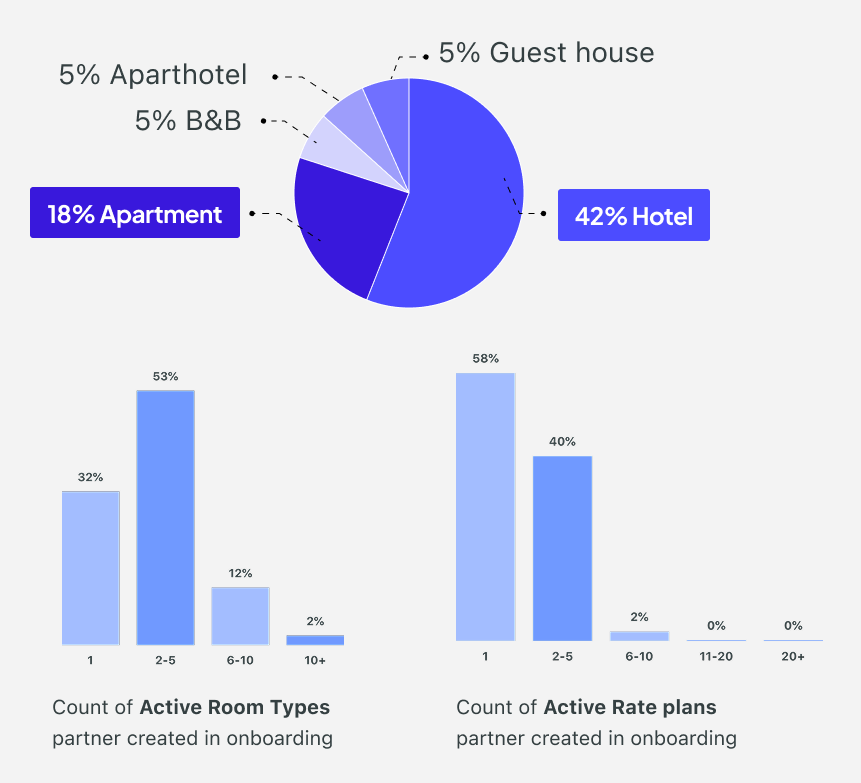
User needs Analysis
Identified our primary audience (hotels and apartments representing 60% of the onboarded properties) and analyzed their critical onboarding patterns, revealing that most partners need to set up multiple room types but prefer simple rate structures.
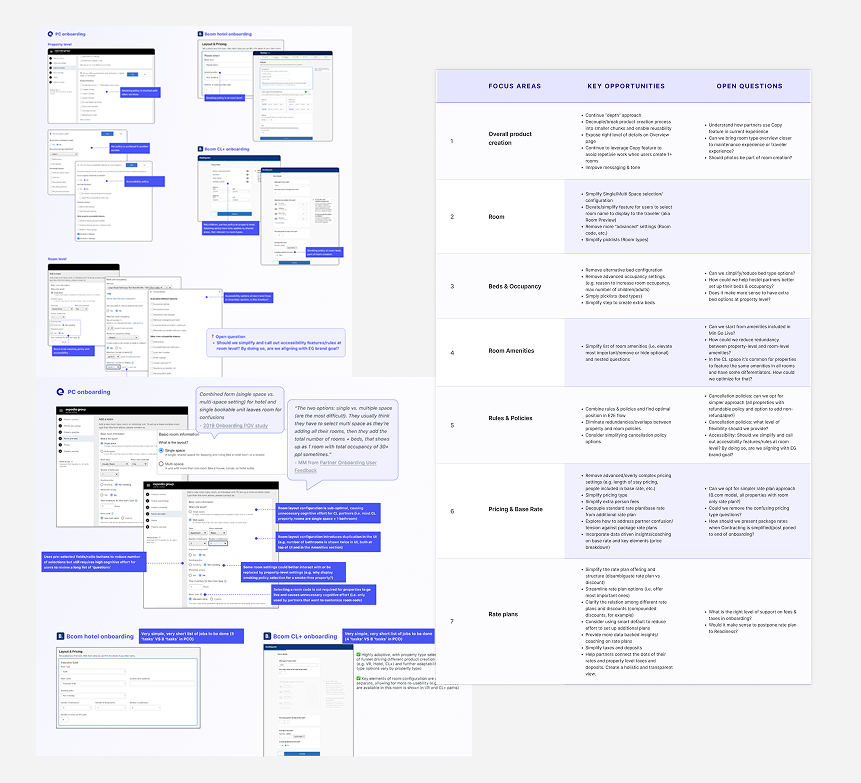
Opportunity synthesis
Analyzed each individual feature’s actual usage against intended user value, revealing critical insights and opportunities. This became an actionable strategic framework revealed which features to simplify, remove entirely, or enhance - creating clear decision paths when stakeholders had competing priorities.
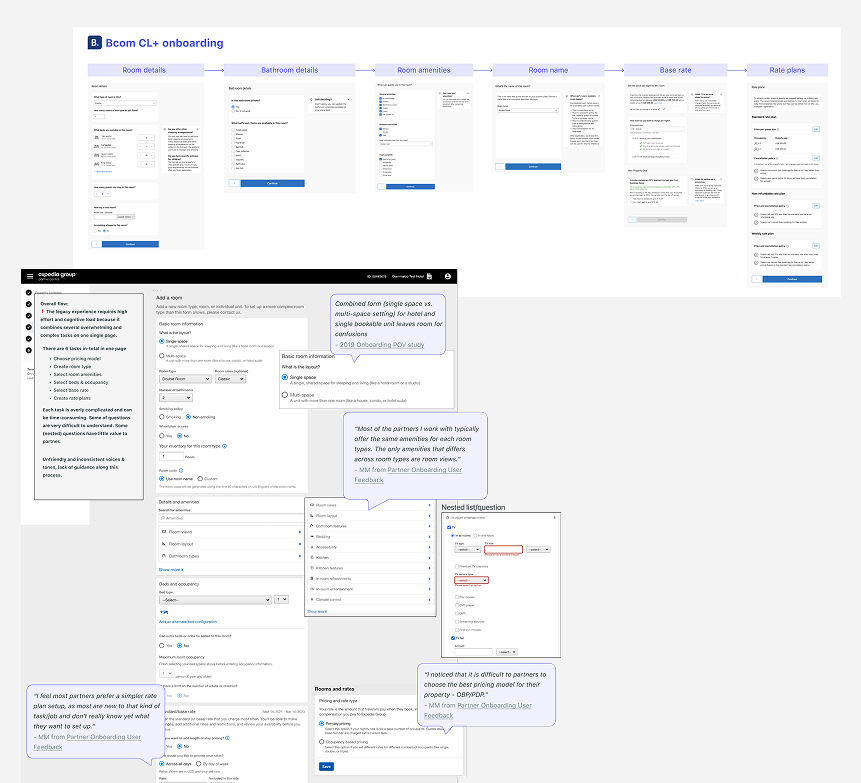
Detailed pain points and competitor analysis
Conducted a comprehensive competitor analysis (focused on Booking.com), and documented critical friction points, uncovering that our complex, single-approach approach created cognitive overload compared to competitors more focused approach - leading us to decouple the long scrolling page into digestible steps
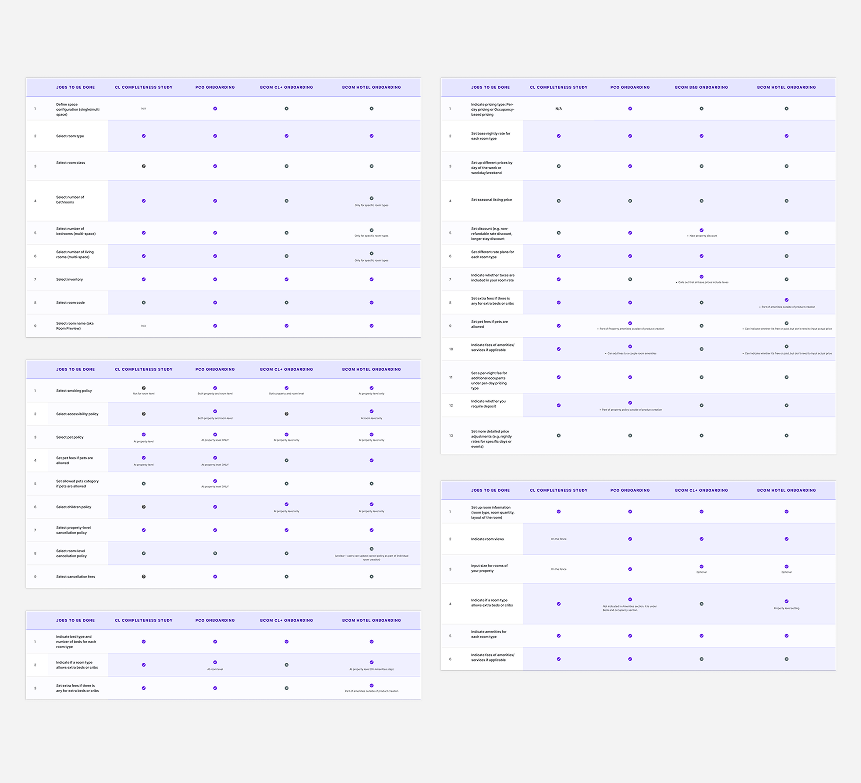
JTBDs framework
Synthesized insights from our previous deliverables into a comprehensive jobs to be done analysis, it directly informed the final product requirement. This framework also aligns stakeholders with a clear and shared goal.
Led experience architecture & design direction
Depth vs. breadth?
I explored “breadth vs. depth” paradigms and found that depth approach is more flexible and scalable for onboarding use case. In addition, existing flow and Booking.com onboarding all use “depth first” approach, which has set the standard and user’s expectation.
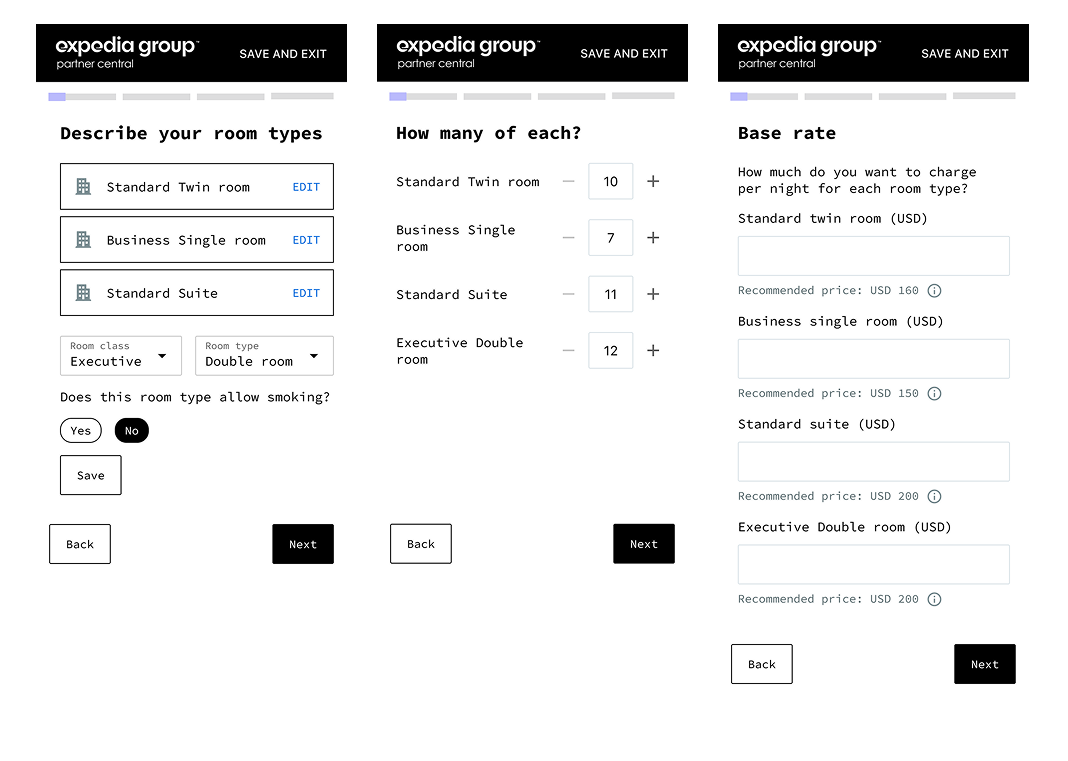
Breadth approach: create all room types all at once
Continued with the “depth” approach:
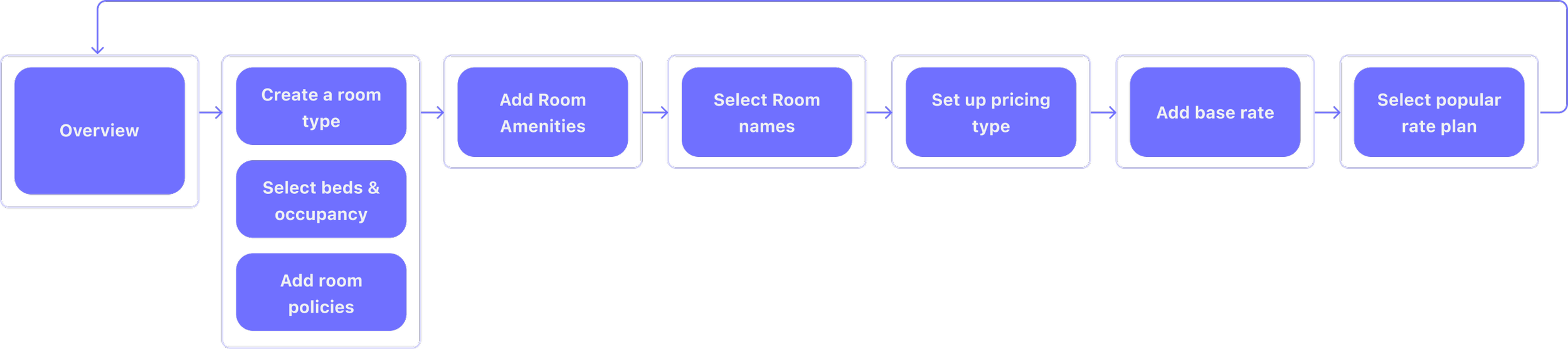
Decoupled the long scrolling page and created a digestible mini-flow for users to create one room type at a time.
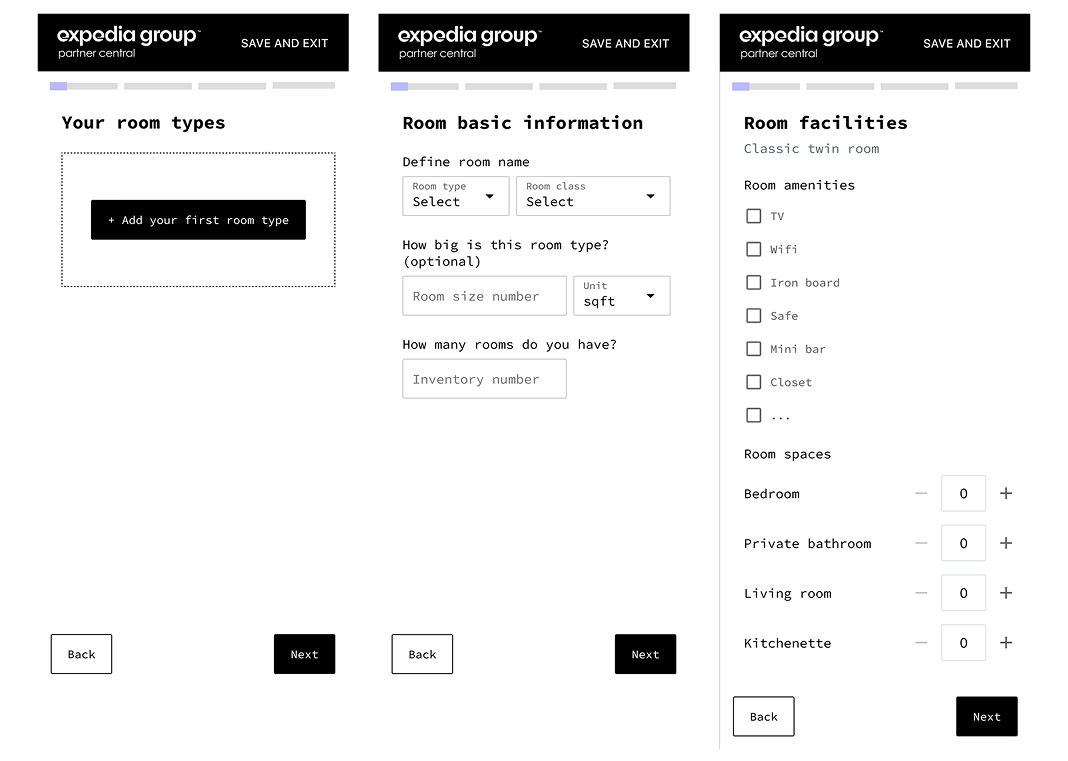
✅ Depth approach: create one room type at a time
Co-drove a strategic implementation
Faced with a year long development estimation, we adopted an incremental approach that balanced three critical priorities:
• Address biggest friction points
• Deliver value to users quickly
• New platform migration (as internal company goal)
This is a key strategic key decision point where I aligned engineer and product team around a shared implementation vision
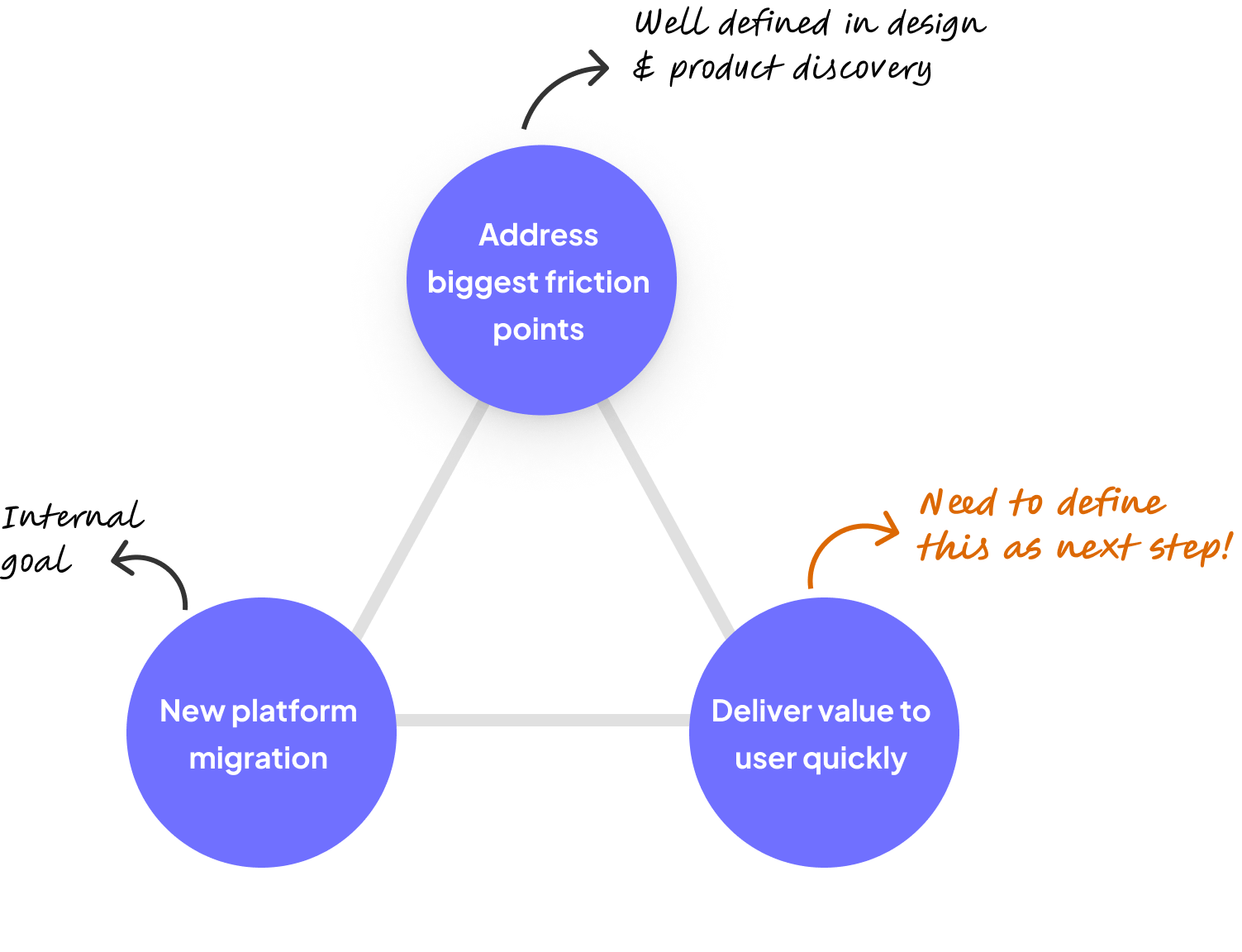
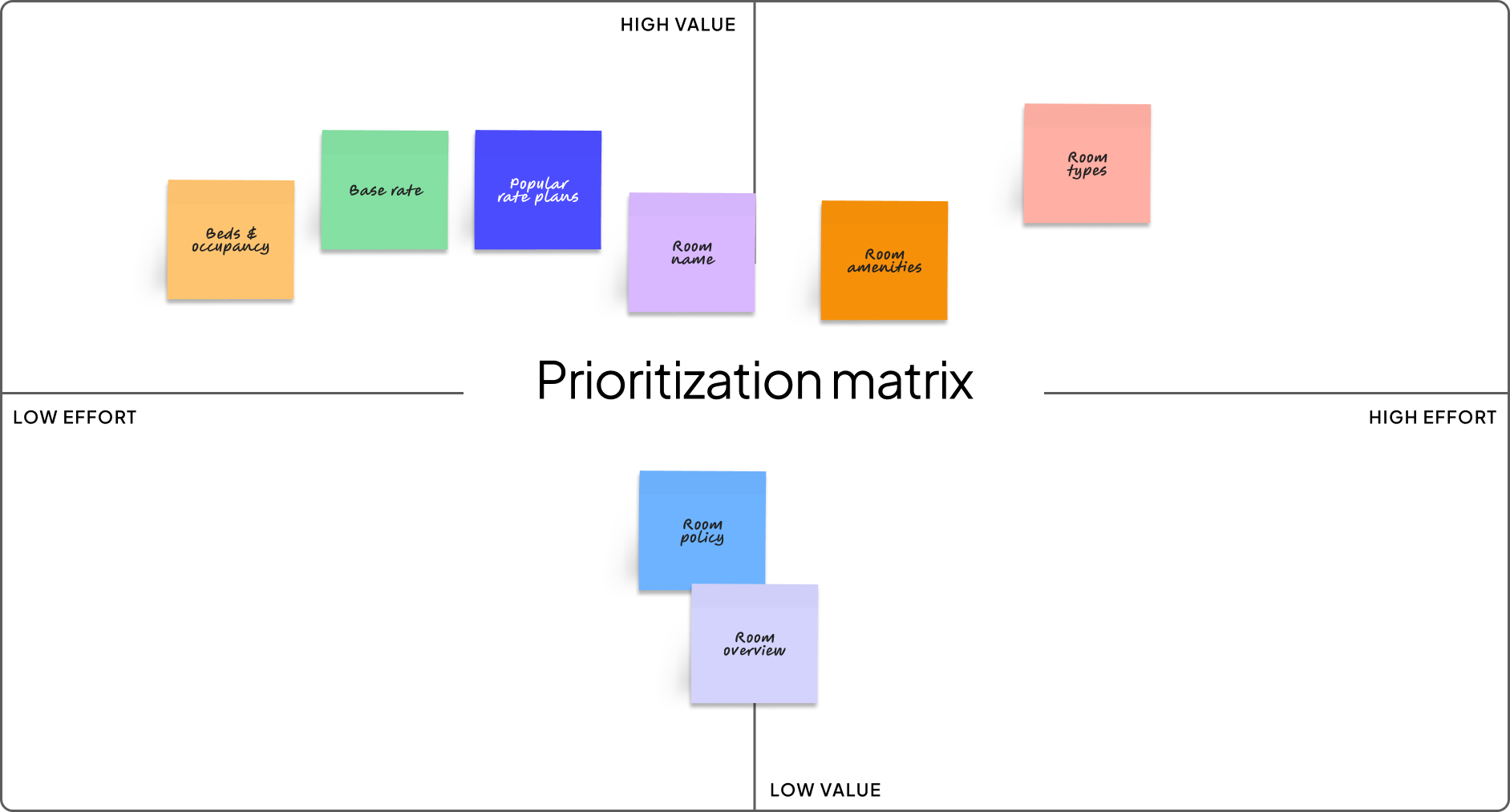
By creating a prioritization matrix that visualized value and effort trade-offs, I aligned engineering and product teams around a shared implementation strategy that optimized for both immediate impact and long term scalability.
This matrix also helped leadership understand for our incremental delivery decision.
Define user value deliver
Design evolution through testing
⭐️ Key touchpoint 1: setting the foundation
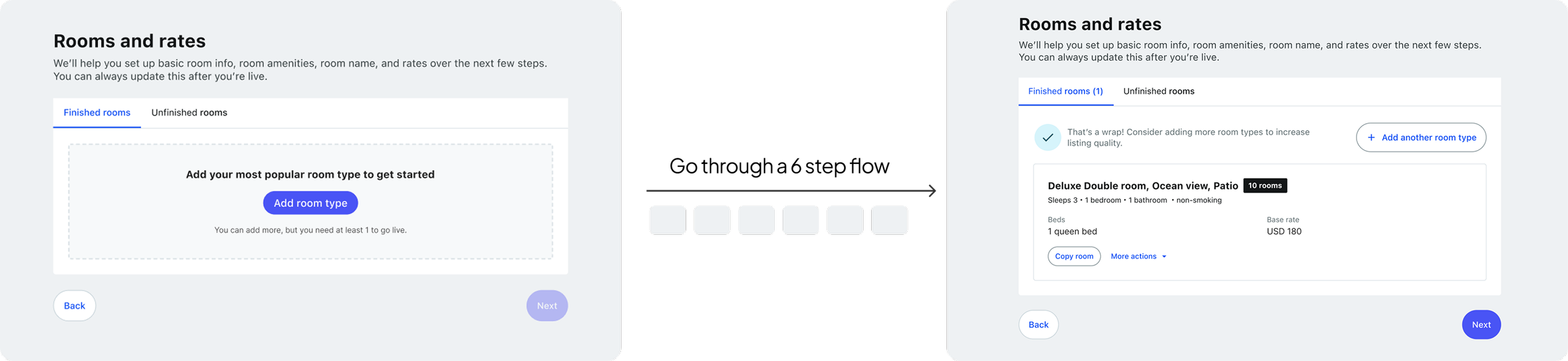
I needed to validate that breaking the process into a focused 6-step would improve completion rates without frustrating or confusing partners who preferred a one-pager view.
💯 As result: the numbers speak
Since the rollout, this focused 6-step achieved >90% step CVR (~98% median step CVR for each step throughout the flow).This approach also reduced completion time by 7 mins (in median)
⭐️ Key touchpoint 2: addressing the most complex steps
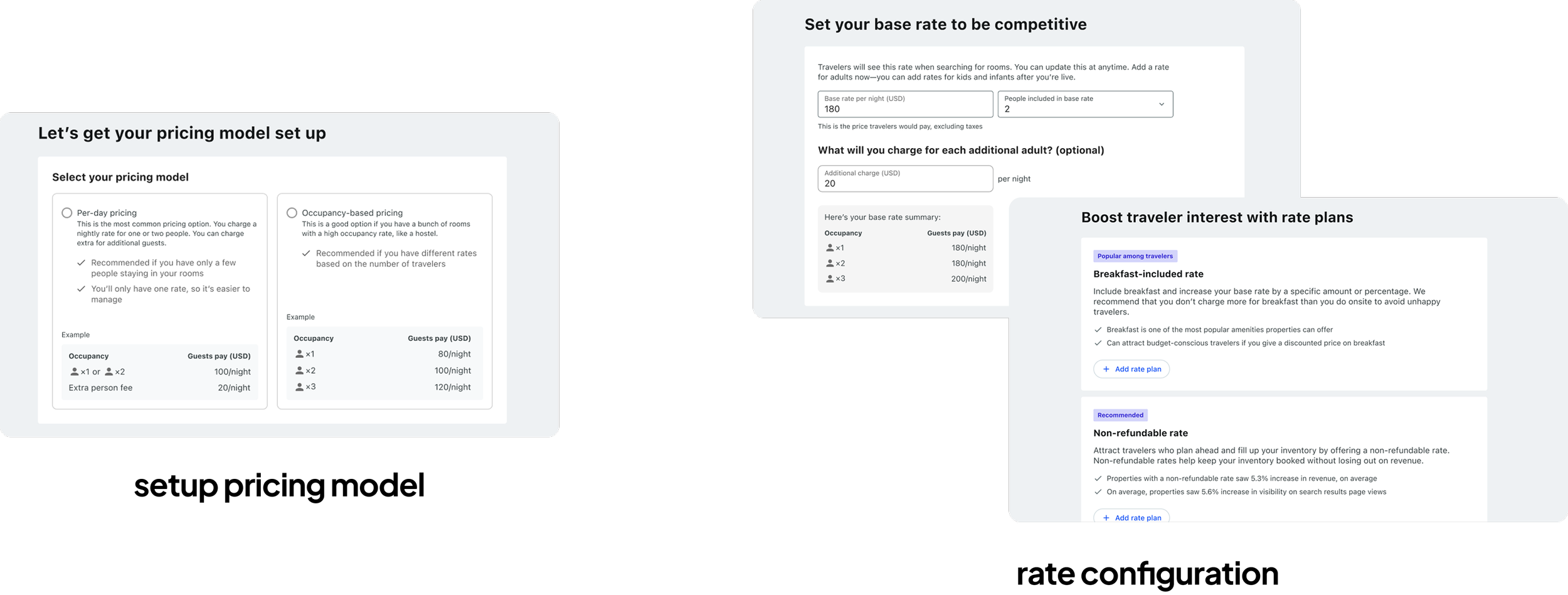
I needed to test the new concepts for most complex areas: setup pricing model and rate configuration.
⭐️ Key touchpoint 3: Rate preview - what travelers see
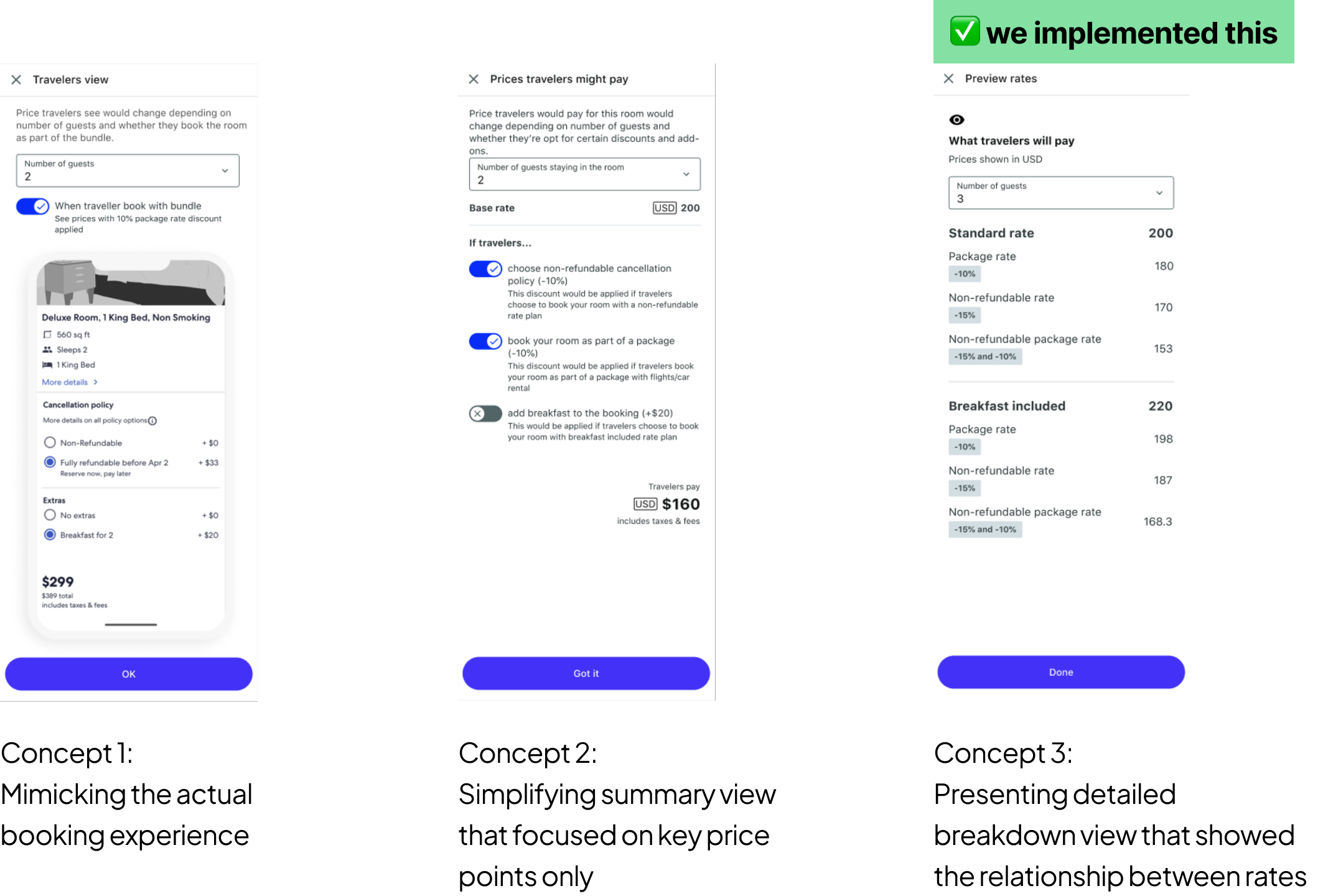
One of the innovations we did was developing a way for partners to visualize how their rates configuration choices would appear to traveler. I created three distinct concepts to test:
These concepts represented different hypothesis about what would give partners confidence that their listing would be competitive and attractive to travelers.
We conducted user research with 7 participants. The goal is to understand if users feel confident creating accurate rooms and rates with this new experience, and if it helps alleviate the known frictions.
There are 3 key touchpoints that shaped our solution strategically.
👏 Success from the iteration
I iterated design based on testing insights, Post-implementation metrics validated our approach with remarkable result - the completion rates for these steps are 99-100%. Even the optional rate plan step saw significant adoption at 40%, suggesting partners found genuine value they previously overlooked.
🔑 Letting users guide our design
Concept 3 provided a clear breakdown of travelers cost based on the plans, and best supported their decision-making process, leading to our final design direction.
Internal ripple effects
Cross-team collaboration model
Our hybrid implementation strategy combining legacy and new platform technologies created a framework for how design, product and engineering teams approach complex migrations, enabling more agile improvements across all partner-facing tools
Technical debt reduction
The incremental implementation approach allowed us to systematically reduce technical debt while delivering immediate value, establishing a model for future platforms migration